
Composite Decking vs. Wood Decking: Which Is Right for Your Home?
April 1, 2026

If you're planning a new deck, one of the first decisions you'll face is choosing between composite and wood. It sounds simple, but the choice affects how your deck looks, how much work it takes to maintain, and how long it lasts. Having built dozens of decks across the Portland metro and Willamette Valley areas, we've helped homeowners work through this exact decision many times. There's no single right answer — it depends on your priorities, your budget, and how you want to use your outdoor space.
Here's a straightforward breakdown of both options to help you make the right call.
What Is Composite Decking?
Composite decking is made from a mix of wood fibers and recycled plastic. It's engineered to look like wood while being more resistant to the elements. Brands like Trex, TimberTech, and Dekorators are popular choices that come in a wide range of colors and finishes.
As a Trex Certified Installer, we work with composite decking regularly and know its strengths — and its limits — firsthand.
What Is Wood Decking?
Wood decking is exactly what it sounds like — natural lumber used to build your deck surface. Cedar is one of the most common choices in the Pacific Northwest because it handles moisture reasonably well and has a warm, classic look that's hard to replicate.
Pressure-treated wood is another option, especially for the structural parts of a deck.
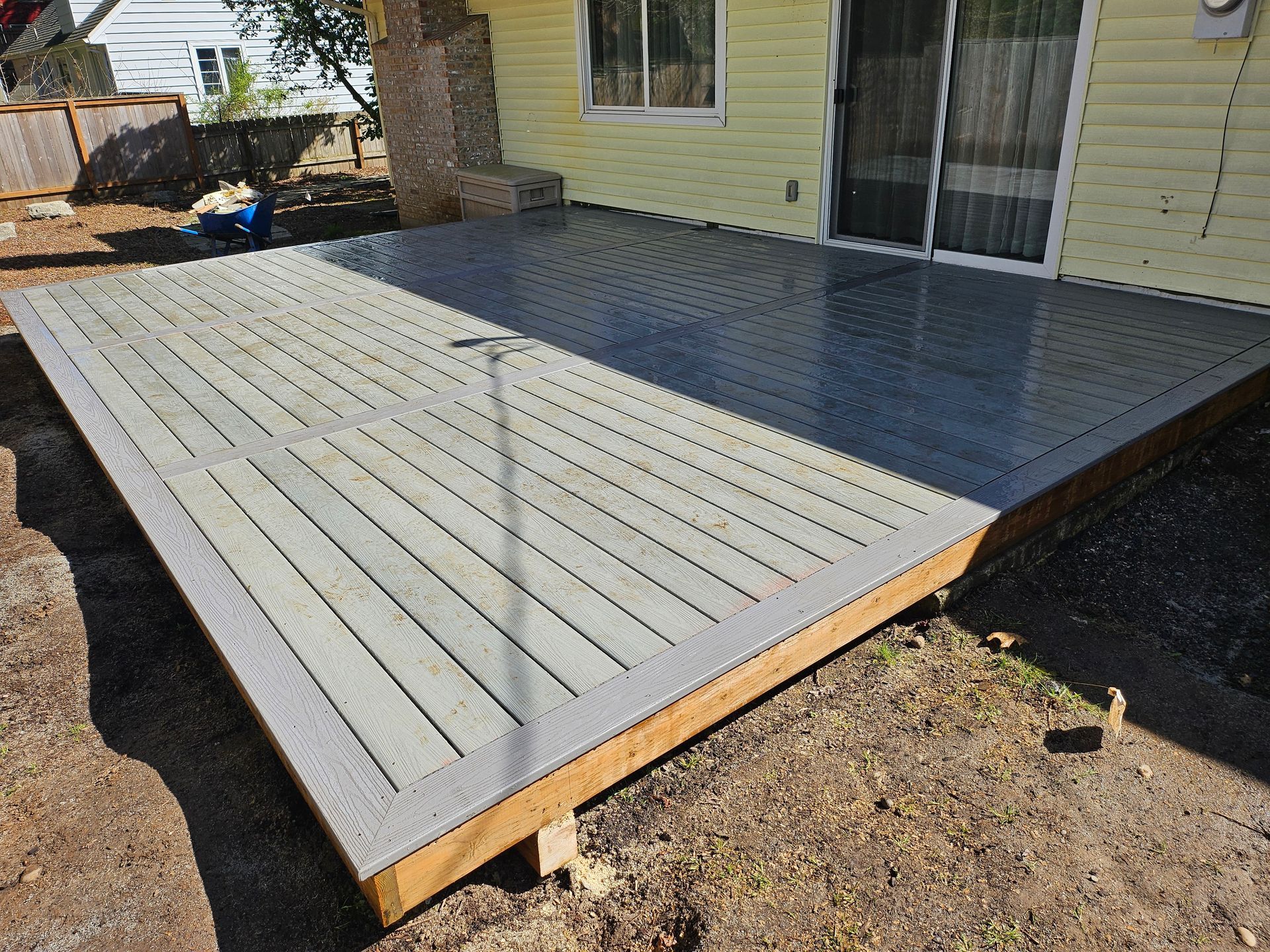
Composite Decking vs. Wood: A Side-by-Side Comparison
Cost
Wood tends to cost less upfront. Cedar decking is more affordable at the point of purchase, which makes it appealing if you're working with a tighter budget.
Composite costs more upfront — sometimes significantly more — but many homeowners find that the long-term savings on maintenance and replacement offset the initial investment over 10 to 15 years.
If you're planning to stay in your home long-term, composite often makes financial sense. If you're planning to sell soon or just need something functional for now, wood may be the better short-term value.
Maintenance
This is where composite pulls well ahead.
Wood decks need regular maintenance to stay in good shape. That typically means cleaning, sanding, staining, or sealing every one to three years depending on your climate. In the Pacific Northwest, where we get a lot of rain and moisture, untreated wood can warp, crack, or rot faster than you'd expect.
Composite decks are much lower maintenance. Most just need a rinse with a garden hose or occasional scrub with soap and water. There's no staining, no sealing, and no sanding.
If you want to spend your weekends relaxing on your deck instead of working on it, composite is the easier choice.
Durability and Lifespan
Wood typically lasts 15 to 25 years when properly maintained. Cedar is naturally rot-resistant, but it still needs care. Neglected wood decks can deteriorate much sooner.
Composite decking is built to last 25 to 30 years or more, and many products come with manufacturer warranties in the 25- to 30-year range. It resists fading, staining, scratching, and moisture far better than natural wood.
If you live somewhere that gets heavy rain or strong sun — both of which are common in Oregon — composite holds up better over time.
Appearance
Wood has a natural warmth and character that many homeowners love. No two boards look exactly the same, and the grain, color variation, and texture feel authentic in a way that's hard to fully replicate.
Composite has come a long way in appearance. Modern composite products like Trex and TimberTech look remarkably close to real wood. Many feature multi-tonal color blends and realistic grain textures. The difference is much harder to spot than it was even 10 years ago.
If having a truly natural wood look is the most important thing to you, wood may still win. But if you're open to composite, you'll likely be impressed by how good it looks.
Eco-Friendliness
Composite decking is often made with recycled materials, including reclaimed wood fibers and recycled plastic. Trex, for example, sources a large portion of its materials from post-consumer and post-industrial waste. This makes it a strong choice for homeowners who care about sustainability.
Wood can also be a responsible choice if it comes from sustainably managed forests — look for FSC-certified lumber.
Comfort Underfoot
One area where wood has an edge is heat. On a hot summer day, some composite decking can get warmer underfoot than natural wood. If you live somewhere with intense sun or plan to go barefoot on your deck, it's worth asking about heat-resistant composite options — many newer products are designed with this in mind.
Which Is Better for the Pacific Northwest?
Oregon's wet winters and moderate summers create specific challenges for outdoor materials. Wood performs fine when maintained well, but the consistent moisture here accelerates wear on untreated or poorly maintained surfaces.
For homeowners in the Portland metro, Salem, Beaverton, Lake Oswego, and Hillsboro areas, composite is often the more practical long-term choice. It stands up to rain and humidity without the same level of ongoing maintenance that wood demands.
That said, cedar decks are still a popular and beautiful option — especially for homeowners who enjoy DIY upkeep and want the look and feel of natural wood.
Questions to Ask Yourself Before You Decide
- How long do I plan to stay in this home?
- How much time am I willing to spend on maintenance each year?
- What's my upfront budget vs. my long-term budget?
- Is natural wood appearance a priority, or am I open to composite?
- Will kids, pets, or heavy foot traffic be hard on the surface?
Your answers will point you toward the right material for your situation.
Ready to Start Planning Your Deck?
At CraftHaven Carpentry, we build both composite and wood decks across the Willamette Valley and greater Portland area. As a Trex Certified Installer, we're experienced with the full range of composite decking products — and we're happy to walk you through the options in plain language so you can make a confident decision.
Give us a call at (971) 406-9203 or fill out our contact form to get started.
Frequently Asked Questions
about choosing decking material
What are the disadvantages of composite decking?
Composite decking has a lot going for it, but it's not perfect. The biggest drawback is the upfront cost. Composite typically costs more than wood to purchase and install. It can also get hot underfoot on sunny days, which matters if you plan to go barefoot on your deck in the summer. Some homeowners feel it doesn't quite match the warmth and character of real wood, though modern composite products have closed that gap significantly. Composite can also be harder to repair if a board gets damaged, since matching the color and texture of an older board can be tricky.
How much should a 400 sq ft composite deck cost?
A 400 square foot composite deck in the Pacific Northwest typically runs between $16,000 and $32,000 installed, depending on the brand, design complexity, railing type, and site conditions. Entry-level composite products like standard Trex sit at the lower end of that range, while premium decking lines with hidden fasteners, upgraded railings, and lighting can push costs higher. Keep in mind that while composite costs more upfront than wood, the long-term savings on staining, sealing, and repairs often make it the better value over 15 to 20 years. For an accurate number, the best step is to get a quote based on your specific yard and design.
Should you power wash composite decking?
You can, but you need to be careful. Most composite decking manufacturers allow light pressure washing at or below 3,100 PSI using a fan-tipped nozzle held at least 8 inches from the surface. Avoid concentrated jet settings, which can damage the decking surface or force water into the board seams. For routine cleaning, a garden hose and a soft-bristle brush are usually all you need. Save the pressure washer for tougher jobs like removing mold, mildew, or built-up grime after a wet Oregon winter.
Can I use Dawn to wash my composite deck?
Yes. Dawn dish soap is a safe and effective cleaner for composite decking. Mix a small amount with warm water, scrub with a soft-bristle brush, and rinse thoroughly. It works well for grease, food residue, and general surface dirt. Avoid cleaners that contain bleach or harsh chemicals, as these can strip the color or damage the surface coating over time. Always rinse the deck completely after cleaning so no soap residue is left behind.
What ruins composite decking?
A few things can cause real damage to composite decking if you're not careful. Harsh chemical cleaners, especially those with bleach or strong solvents, can fade or pit the surface. Leaving wet leaves, debris, or standing water on the boards for extended periods encourages mold and mildew growth. Dragging heavy furniture with sharp metal feet can scratch the surface. Using a high-pressure jet setting on a pressure washer, or scrubbing with a wire brush, can also damage the finish. And while composite is moisture-resistant, it still needs proper spacing and ventilation underneath to prevent long-term issues. Following the manufacturer's care guidelines goes a long way toward keeping your deck looking great for decades.
Recent Posts